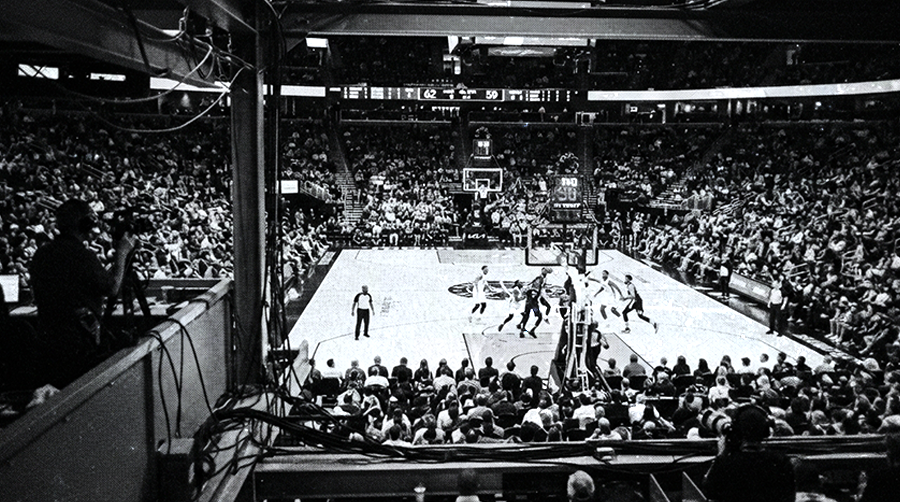
The NBA never stays still for long. A championship changes expectations. A blockbuster trade changes the balance of a conference. One healthy superstar can change a team's entire ceiling. And by the time the opening tip arrives, the league you thought you knew in June can look very different in October.
Welcome to the 2026–27 NBA season. The regular season begins October 20, and there is plenty to sort out before we get too attached to the preseason predictions.
The New York Knicks are defending champions. The San Antonio Spurs are no longer an interesting young team waiting for their turn; they are a legitimate Western Conference force. Oklahoma City remains dangerous. And several major offseason moves have rearranged the contenders, particularly in the East.
For basketball fans, that's a terrific opening act. For bettors, it creates a more complicated question: which expectations have the sportsbooks already priced correctly, and which ones deserve a second look?
The Championship Picture: A Different NBA
Start with New York. The Knicks enter the season as defending NBA champions, which changes the way every opponent approaches them. Winning a title is hard enough. Defending one means playing with a target on your back for 82 games.
Jalen Brunson remains central to New York's identity. His ability to control pace, get into the paint and manufacture offense late in possessions gives the Knicks a dependable foundation. But the regular-season challenge is broader than the closing minutes of a playoff game. The question is whether the rotation can stay sharp and healthy while opponents spend the entire season preparing to knock off the champions.
My view: New York deserves respect, but last year's trophy is not a reason to accept any price on this year's futures board. The defending champion can be an excellent team and still be an unattractive wager.
Western Conference: San Antonio and Oklahoma City Set the Standard
San Antonio Spurs: The Future Has Arrived
Victor Wembanyama is the kind of player who changes the geometry of a basketball game. He affects what opponents attempt at the rim, what shots they settle for, how quickly they move the ball and how much space his teammates have to work with.
But San Antonio's appeal is no longer limited to one extraordinary big man. De'Aaron Fox, Stephon Castle and Dylan Harper give the Spurs different ways to initiate offense and attack the defense. The real intrigue is how those pieces fit together across 48 minutes.
Which guards share the floor? Who organizes the second unit? How much shooting can San Antonio maintain around Wembanyama without compromising its defensive identity?
Those are not minor coaching details. They can determine whether a team wins comfortably, survives a close finish or gives back a lead when the starters rest.
After reaching the 2026 NBA Finals, the Spurs enter this season with championship expectations rather than developmental excuses. That's a big change, and I'm interested in how quickly the rotation settles.
Oklahoma City Thunder: Still a Serious Threat
Don't make the mistake of treating Oklahoma City's Western Conference Finals exit as evidence that its window has closed.
Shai Gilgeous-Alexander remains one of the league's most difficult individual matchups. Chet Holmgren provides rim protection and offensive versatility. Jalen Williams, when healthy, adds another dimension to the attack.
The questions are about the supporting cast. Oklahoma City lost several important perimeter and rotation contributors during the offseason, and replacing their defensive habits and floor spacing will take more than plugging new names into the box score.
The Thunder have enough top-end talent to remain in the championship conversation. What I want to see early is whether the new combinations maintain the defensive pressure and offensive efficiency that made this team so difficult to play against.
Denver, Minnesota and the Rest of the Chase
Denver remains a team nobody should dismiss while Nikola Jokic is running the offense. His passing changes the entire defensive equation, and the Nuggets can punish teams that lose their assignments for even a moment.
Minnesota brings a different challenge. Anthony Edwards is already one of the league's most explosive perimeter scorers, and the arrival of LaMelo Ball adds another major creative presence. The upside is obvious. So is the adjustment period: two dynamic players still need to establish who controls which possessions and how the offense functions without the ball.
Houston also belongs in the conversation about teams capable of making life difficult for the established contenders. The West is deep enough that a very good team could spend months fighting for playoff positioning.
For futures bettors, that depth matters. A team can have championship-caliber talent and still face an exhausting road just to reach the conference finals.
Eastern Conference: The Knicks Have Company
Philadelphia 76ers: A Fascinating New Experiment
Philadelphia has assembled one of the league's most talked-about groups. LeBron James and Jaylen Brown join a roster featuring Joel Embiid, Tyrese Maxey and VJ Edgecombe.
On paper, the talent is extraordinary. On a basketball court, the challenge is finding enough touches, movement and defensive balance for everyone to be effective.
Maxey can change the tempo in a hurry. Embiid demands attention inside. Brown creates pressure off the dribble. LeBron sees passing angles most players never recognize. That combination could overwhelm opponents when the offense is flowing.
It could also take time to develop. Roles that look straightforward on a roster graphic become more complicated when the game is tied with four minutes remaining.
Philadelphia's ceiling is high. I'm not interested in pretending the chemistry is automatic.
Miami Heat: Giannis Changes Everything
Giannis Antetokounmpo's move to Miami is one of the defining changes of this NBA offseason. His ability to attack the rim, create transition opportunities and draw multiple defenders changes how the Heat can build an offense.
Alongside Bam Adebayo, Miami has an imposing defensive foundation and an intriguing offensive puzzle. Spacing will be the detail to watch. Opponents will try to crowd the paint, and Miami's perimeter execution must make that strategy expensive.
Klay Thompson's arrival adds another recognizable shooting threat, but the effectiveness of the complete group will depend on the lineups and the quality of the looks they generate.
Miami should be taken seriously. Still, a dramatic offseason is not the same thing as a finished product.
Boston, Cleveland and the Teams Nobody Wants to Face
Boston and Cleveland remain relevant to any serious Eastern Conference discussion. Both organizations have the ability to make a long regular season uncomfortable for opponents, even as their personnel and rotations evolve.
And don't ignore the middle of the conference. Indiana, Detroit, Orlando and other improving teams can make playoff seeding far less predictable than the early championship conversation suggests.
That's one of the reasons I pay attention to the second tier of the standings. The biggest betting opportunities are not always attached to the teams getting the most television coverage.
Five Things I'll Be Watching in the First Month
1. Which New-Look Teams Actually Fit Together?
Big-name acquisitions sell tickets and generate headlines. They do not automatically produce a coherent offense.
I'll be watching shot distribution, lineup combinations, turnover rates and whether coaches trust their second units. A team with an impressive starting five can still struggle to cover a spread if its bench minutes are consistently negative.
2. Pace and Scoring Totals
Totals are especially interesting early in the season because last year's offensive and defensive numbers may not describe this year's roster.
A new lead guard can accelerate the game. A change in coaching philosophy can produce more early-clock shots. A different defensive scheme can create or eliminate transition opportunities.
Preseason pace is worth observing, but it needs context. Exhibition lineups and minutes restrictions can make the raw numbers misleading.
3. The Availability of Key Players
NBA injury reports can move a market quickly, but the name on the report is only the beginning of the analysis.
If a primary ball handler sits, who creates the offense? If a center is unavailable, does the team play smaller and faster? If a defensive stopper misses a game, which opponent benefits most?
The matchup implications matter more than simply knowing that a star is out.
4. Early Betting Lines Versus Reality
Preseason power ratings provide a starting point, not a finished assessment. By November, we may discover that certain teams are much better or worse than the market expected.
That's where detailed game review becomes useful. I want to know whether a team is creating good shots, defending without fouling and sustaining its performance across different lineups—not merely whether it has started 6–2.
5. Who Can Win Without Their Best Player Dominating?
Championship teams need options. When the opposing defense takes away the first action, somebody else must make a play.
That ability becomes particularly important late in games and during the playoffs, when opponents have more time to study tendencies. Teams that depend on one spectacular individual performance every night are difficult to price with confidence.
What the 2026–27 NBA Season Means for Bettors
There are several ways to approach the NBA betting market, and each requires a different type of analysis.
NBA Futures
Championship, conference, division and regular-season win-total markets invite bettors to form a long-term opinion about a team. But the best team is not necessarily the best wager. A favorite can be priced so aggressively that the potential return does not justify the uncertainty.
Health, roster depth, schedule strength and the difficulty of the playoff path all matter. So does the amount of money tied up for months.
Point Spreads and Moneylines
These markets are where matchup research becomes particularly important. Rest, travel, lineup availability, defensive assignments and the actual number being offered all deserve attention.
A good basketball opinion isn't complete until it is compared with the sportsbook's price. For a broader explanation of that process, see How Professional Sports Handicapping Works.
Game Totals and Player Props
Totals depend on much more than two teams' scoring averages. Pace, shot profile, free-throw rates, offensive rebounding and lineup combinations can all influence the scoring environment.
Player props require similar attention to context. Minutes, usage, role changes and the opponent's defensive approach can matter more than a player's average over the previous five games.
These markets can be attractive to study, but they are also vulnerable to stale assumptions. A player's role in October may look nothing like the role he occupied last April.
Why I Don't Trust October Predictions Too Much
Here's my annual warning: preseason predictions are useful right up until we start treating them as facts.
The first month of the NBA season is full of noise. A team can shoot an unsustainable percentage from three. A contender can lose several close games. A new roster can look disorganized for two weeks before everything clicks.
It's tempting to declare a team finished after a slow start or crown a new favorite after a handful of wins. Usually, the better approach is to study what is happening underneath the results.
That means looking at shot quality, turnover patterns, defensive communication, lineup data and the prices being offered.
Our article Sports Betting Strategy: Why Long-Term Results Matter More Than Winning Today explains why a single game—or even one excellent week—is a poor foundation for evaluating a betting process.
Betting Units Matter in an 82-Game Season
The NBA schedule creates a temptation to bet constantly. There are games almost every night, multiple markets on each game and always another opportunity coming tomorrow.
That does not mean every game deserves a wager.
A bettor who risks too much on a few early-season opinions can damage a bankroll long before the league's real hierarchy becomes clear.
For a practical explanation of wager sizing, total exposure and why losing streaks must be anticipated, read Sports Betting Bankroll Management.
Good basketball analysis and sensible risk limits should be partners. Neither one guarantees a profit, but ignoring either can create unnecessary problems.
My Early NBA Outlook
I'm starting with San Antonio and Oklahoma City as the two teams I most want to study in the West. The Spurs have the defensive centerpiece and growing offensive talent to challenge anyone. The Thunder still have an elite core, but their revised supporting cast needs to prove itself.
In the East, New York has earned the right to begin as the team everyone measures themselves against. Philadelphia and Miami have the star power to make the conference race fascinating, although both need to show how their new pieces work together.
And I won't be surprised if one or two teams outside the early championship headlines become far more interesting by December.
Those are basketball opinions, not automatic betting recommendations. I would need to see the available odds before deciding whether any of them belongs on a futures ticket.
Opening Night Is Only the Beginning
October 20 brings three games that tell the story of the league's new season: Boston against Detroit, Philadelphia against New York, and Oklahoma City against San Antonio.
There's a little bit of everything in that schedule—established contenders, a defending champion, major roster changes and a Western Conference rivalry that already feels important.
I'll be watching the basketball first: who controls the tempo, which lineups make sense, who gets the important possessions and whether the defensive schemes match the preseason talk.
The betting conclusions can follow after the evidence.
That's the appeal of a new NBA season. We all have opinions in October. The next six months will tell us which ones deserve to survive.
For more about how the publication develops its daily selections, see About Sports Bet Advisor.
James Carter
Basketball Editor
Sports Bet Advisor
James Carter covers professional and college basketball for Sports Bet Advisor, with an emphasis on team matchups, rotations, player performance, pace and the betting markets that shape each game. His analysis examines how basketball decisions on the court translate into opportunities—and risks—at the sportsbook.
Editorial note: This article is provided for informational and educational purposes. Sports betting involves financial risk, and no prediction or betting strategy guarantees a profit. Never wager money needed for essential expenses or financial obligations.